
Top 5 Things That Help Your Ontario Fleet Insurance
The right choices can help reduce premiums, close coverage gaps, and lower the chance of claims that take vehicles off the road.
AUTO SERVICEFARMTRANSPORTATIONGENERAL ARTICLESMANUFACTURINGRETAILRESTAURANTSRESORT/HOTELS/CAMPS
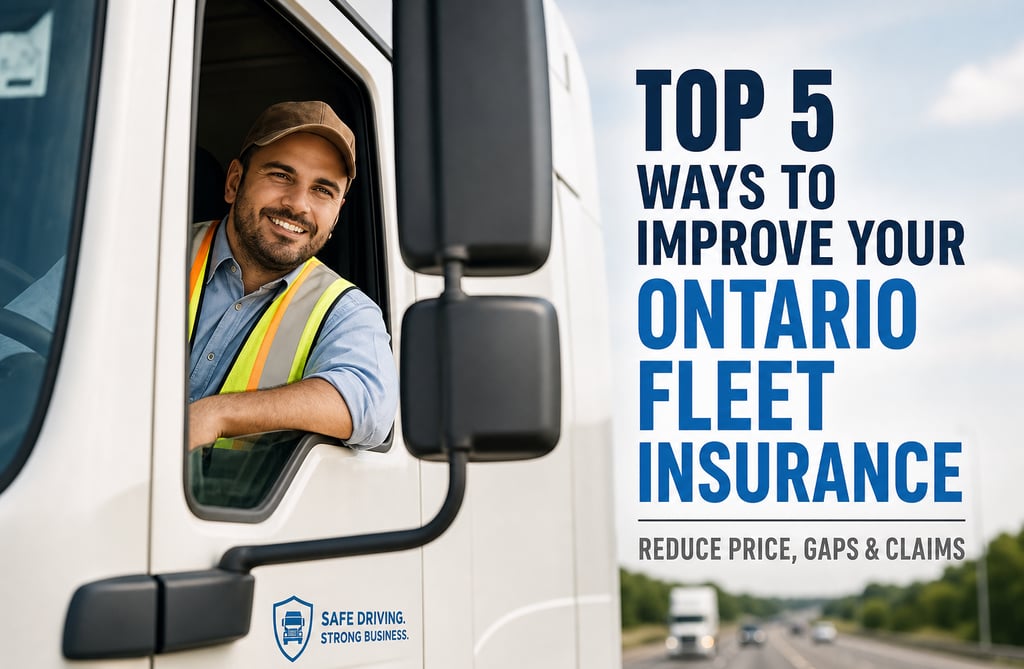
Top 5 Things That Help Your Ontario Fleet Insurance
If your business relies on a fleet of vehicles in Ontario, insurance is more than a renewal item — it’s a risk-management tool. The right choices can help reduce premiums, close coverage gaps, and lower the chance of claims that take vehicles off the road. Here are five practical things that can make a real difference.
1. Keep driving records clean and your CVOR/CVDR even cleaner.
A fleet’s loss history starts with the people behind the wheel. Clean abstracts, fewer convictions, and fewer at-fault accidents can all help keep premiums more manageable. In Ontario, your CVOR and driver records matter because they help show how safely your operation is run. Regular monitoring, immediate follow-up on issues, and a culture of accountability can go a long way toward reducing both claims and insurance friction.
2. Match coverage to how the fleet is actually used
A lot of problems happen when a policy doesn’t reflect the real operation. Make sure the insurer knows what the vehicles do, where they go, who drives them, and whether they carry tools, equipment, or goods. If the use is misclassified, you could face gaps at claim time or pay for coverage you don’t truly need. Accurate details help create the right policy and avoid surprises.
3. Install safety and tracking technology
GPS tracking, dash cameras, backup alarms, telematics, and anti-theft devices can all help improve fleet performance and reduce risk. These tools can discourage unsafe driving, help recover stolen vehicles, and provide evidence if a claim happens. Many fleets also use tracking data to coach drivers and spot risky habits before they turn into losses. Over time, that can support both fewer claims and better pricing.
4. Build a stronger risk-management routine
Insurance companies like to see proof that the business takes safety seriously. Written driver policies, regular training, vehicle inspection logs, and maintenance records all help show that your fleet is managed properly. Preventive maintenance is especially important because worn brakes, tires, or lights can lead to avoidable accidents and downtime. The better your process, the better your protection.
5. Prequalify drivers before hiring, then train them well.
One of the best ways to reduce fleet losses is to start with the right people. Check driver abstracts, verify experience, review accident history, and look for a fit with the type of work your fleet does. After hiring, ongoing training helps reinforce safe habits, proper vehicle use, and company expectations. Good hiring practices paired with regular training can reduce claims, improve retention, and support a better insurance profile over time.
A better way to think about fleet insurance
The best fleet insurance strategy is not just about lowering the bill. It is about building a policy that fits your operation, protects your people, and keeps your business moving after a loss. Small changes in driver selection, vehicle setup, and safety habits can have a big effect on both claims and cost.
For Ontario fleet owners, the smartest move is to treat insurance as part of the overall business plan. When the fleet is well managed, the insurance usually becomes easier to place, easier to renew, and easier to trust.
Disclaimer: This article is for general information purposes only and does not constitute legal, financial, or insurance advice. Insurance rules and coverage details can change, and individual circumstances vary significantly. For specific guidance about your policy, coverage options, or how these changes affect your situation, please contact a licensed insurance broker, agent, or insurer directly. You may also want to review the official Statutory Accident Benefits Schedule (SABS) or consult with a legal professional for personalized advice.