
Tenant Legal Liability: Why Low Limits Can Put a Garage or Shop at Serious Risk
Tenant legal liability is one of the most overlooked parts of a garage or shop insurance policy, yet it can become one of the most important after a loss.
AUTO SERVICEFARMTRANSPORTATIONRESORT/HOTELS/CAMPSGENERAL ARTICLESMANUFACTURINGRETAILRESTAURANTS
Tenant Legal Liability: Why Low Limits Can Put a Garage or Shop at Serious Risk
Tenant legal liability is one of the most overlooked parts of a garage or shop insurance policy, yet it can become one of the most important after a loss. For any repair garage, body shop, detailing operation, tint shop, or accessory installer that rents its location, this coverage is designed to respond when the tenant is legally responsible for damage to the rented premises. In practical terms, it protects the business when its operations, staff, or day-to-day activities cause damage to the landlord’s building.
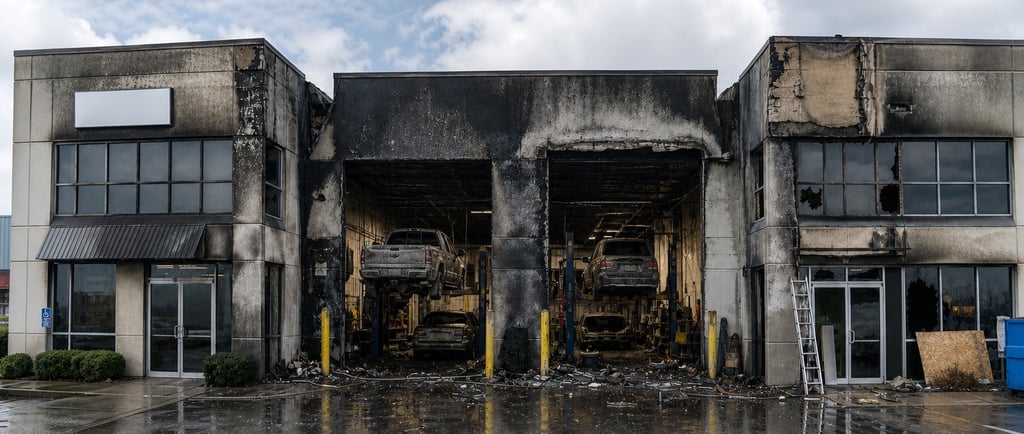
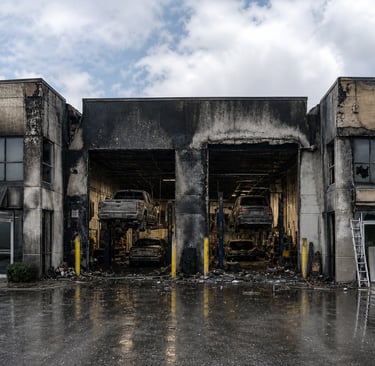
That matters because garage operation brings real property-damage exposures. Heat work, paint materials, detailing equipment, electrical tools, battery charging, lifts, compressors, and simple human error can all lead to fire, smoke, water, or structural damage. A small accident can quickly become a large building claim, especially in a multi-unit commercial plaza or larger industrial property where damage can spread beyond the occupied unit.
The problem is not always the absence of coverage. Often, the issue is that the tenant legal liability limit is too low. Some commercial policies may include tenant legal liability, but the sublimit can be far less than the total commercial general liability limit, businesses may carry limits as low as $250,000. That sounds substantial until a serious fire, smoke event, or water loss affects the unit, adjoining units, building systems, and repair costs tied to today’s construction prices.
For a garage or shop, low limits can create a dangerous gap. If the damage to the rented premises exceeds the tenant legal liability limit, the business may have to fund the uninsured balance itself, while also dealing with downtime, strained landlord relations, and possible lease issues. This coverage can respond to repair costs, legal defence costs, settlements, and court-awarded damages when a landlord or insurer pursues recovery. In other words, an underinsured tenant may face both property costs and legal costs at the same time.
Another point that causes confusion is the difference between tenant legal liability and contents or property insurance. Tenant legal liability is intended to protect against damage to the rented premises for which the tenant is legally responsible, not the tenant’s own tools, stock, equipment, or customer-related property. A garage can therefore be caught from two directions: inadequate protection for the landlord’s building and separate uninsured loss to its own business property if the insurance policy is not structured properly.
The smarter approach is to review the lease, confirm the required limit, and compare that requirement to the actual tenant legal liability limit shown in the policy, not just the headline CGL limit on a certificate. The limit should be sufficient to cover a complete rebuild of the rented space, a warning that certificates often show the overall CGL limit without highlighting a much smaller tenant legal liability amount. For garages and shops, that review can make the difference between an insured claim and a loss that threatens the business itself.