
Protecting livestock, buildings and business:
Preventing equipment fires and managing animals placed in neighbours’ care.
FARMGENERAL ARTICLES
Protecting livestock, buildings and business:
Preventing equipment fires and managing animals placed in neighbours’ care.
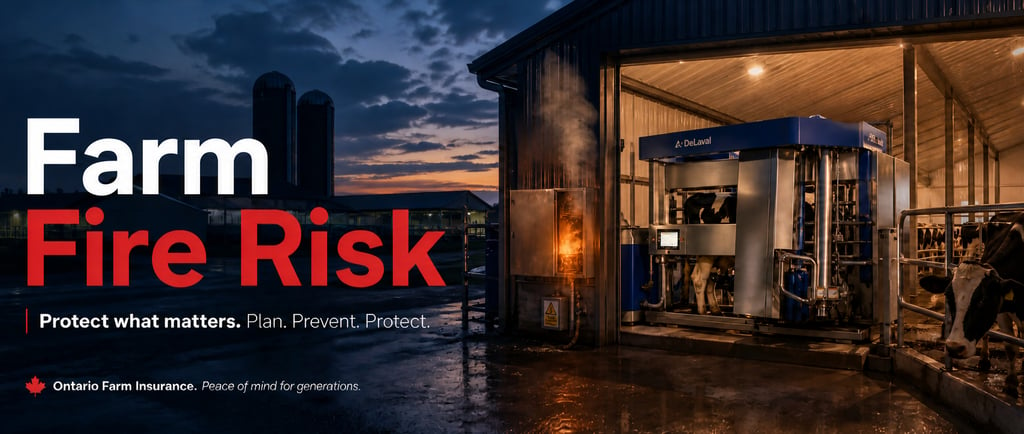
Farms today blend traditional practices with increasingly sophisticated automation, and that mix brings new exposures as well as efficiencies. One rising source of costly claims is equipment-related fire that often a single motor, bearing or electrical fault that overheats in a dusty, combustible environment and becomes a full barn fire. A recent claim involved a robotic milking system whose feed motor jammed, overheated, and caught fire; the blaze spread rapidly, damaging buildings and displacing cattle. These events highlight two related risks every farm should manage: preventing equipment failures from starting fires, and handling the downstream consequence when animals must be moved to neighbouring farms, including the legal and insurance implications of care, custody and control.
How these fires start
Mechanical stress and wear: Bearings seize, motors jam, belts slip and generate heat long before visible smoke appears.
Electrical faults: Faulty wiring, aged insulation, overloaded circuits, or improperly protected junctions can create sparks or continuous heat.
Combustible environment: Hay dust, feed dust and loose chaff collect around motors and electrical panels, supplying the fuel a small hot spot needs.
Unattended operation: Automated systems often run for long hours with minimal human oversight; faults that would be caught quickly on a staffed site can smoulder unseen.
Inadequate safeguarding: Lack of thermal cutouts, temperature sensors, or routine maintenance increases the chance that an overheating part keeps running until ignition.
Prevention - practical risk controls
Scheduled maintenance: Follow manufacturer intervals and document inspections for bearings, motors, belts and electrical systems. Replace worn parts proactively.
Install detection and automatic shutoffs: Temperature sensors, motor-current monitors, and automatic cutouts stop an asset before it becomes a source of ignition. These controls are especially valuable on unattended systems like milking robots and feed conveyors.
Electrical audit: Have a qualified electrician inspect wiring, circuits, and panel clearances; add ground-fault protection and appropriate surge protection.
Housekeeping: Make cleaning around motors, fans and electrical enclosures part of daily or weekly routines to reduce dust buildup.
Monitoring and alarm systems: Cameras, remote sensors, and smoke/heat alarms with farm-level escalation let you respond quickly to small problems.
Training and SOPs: Ensure staff and family know shutdown procedures, emergency contacts, and where to find fire extinguishers and shutoff points.
When animals must move - care, custody and control risks
Moving animals to a neighbouring farm after a fire can save lives and keep operations running, but it creates another layer of exposure. The farm that receives animals may become responsible for their safety and can face claims if animals escape, are injured, or die while in their care. At law and in insurance practice, physical control often matters — the party with the animals has duties that can give rise to liability if something goes wrong.
Insurance and contractual pitfalls
Coverage gaps: Not all livestock policies automatically cover animals while off-premises or in third-party custody; transit and off-site endorsements may be required.
Care, Custody & Control (CCC): For the receiving farm, CCC exposures can transform an otherwise property-style loss into a liability exposure if the host is contractually responsible for the animals’ value. CCC is commonly excluded or limited under some policies unless specifically added.
Business interruption and consequential loss: Displacement of animals and operational downtime can cause income loss beyond the physical damage; these exposures need separate attention.
Biosecurity and disease risk: Mixing animals between herds raises disease transmission risk, which can itself trigger loss or regulatory costs.
Practical checklist when neighbours take in livestock
Execute a written short-term care agreement: State dates, number and ID of animals, feeding and veterinary responsibilities, compensation or reimbursement terms, and termination conditions.
Confirm insurance before movement: Owners should check their livestock and transit coverage; hosts should confirm CCC or liability limits and consider being named as an interested party where appropriate.
Recordkeeping: Transfer animal IDs, health records, and current treatments; photograph animals and document condition on arrival.
Biosecurity protocols: Isolate incoming animals, follow vaccination and testing recommendations, and maintain strict hygiene to reduce disease spread.
Minimize exposure: House temporary stock in separate paddocks or pens, secure fencing and gating, and keep records of who has access.
Plan for return or sale: Agree on the process if animals are to be returned, sold, or euthanized after treatment, including who bears costs.
Suggested client-facing language (short)
“If you need to move stock off-site after a loss, get arrangements in writing and check both owners’ and hosts’ insurance first — this small step protects animals and prevents surprises when claims are made.”
Why this matters now
Spring and fall are common times for operations to push equipment hard — seasonal feeding, long milking cycles, and heavy ventilation use all increase stress on motors and wiring. At the same time, animal movements are more frequent during these seasons, making clear care arrangements and insurance checks timely actions for risk-conscious producers.
Example short agreement clause (one-sentence)
“Host agrees to care for the listed animals from [start date] to [end date], providing feed, routine husbandry and emergency veterinary care, and the Owner will reimburse reasonable expenses within 30 days; both parties confirm insurance coverage for animals while off-premises and maintain records of health and ID.”
Disclaimer: This article is for general information purposes only and does not constitute legal, financial, or insurance advice. Insurance rules and coverage details can change, and individual circumstances vary significantly. For specific guidance about your policy, coverage options, or how these changes affect your situation, please contact a licensed insurance broker, agent, or insurer directly. You may also want to review the official Statutory Accident Benefits Schedule (SABS) or consult with a legal professional for personalized advice.