
5 Summer Factors Businesses Should Watch
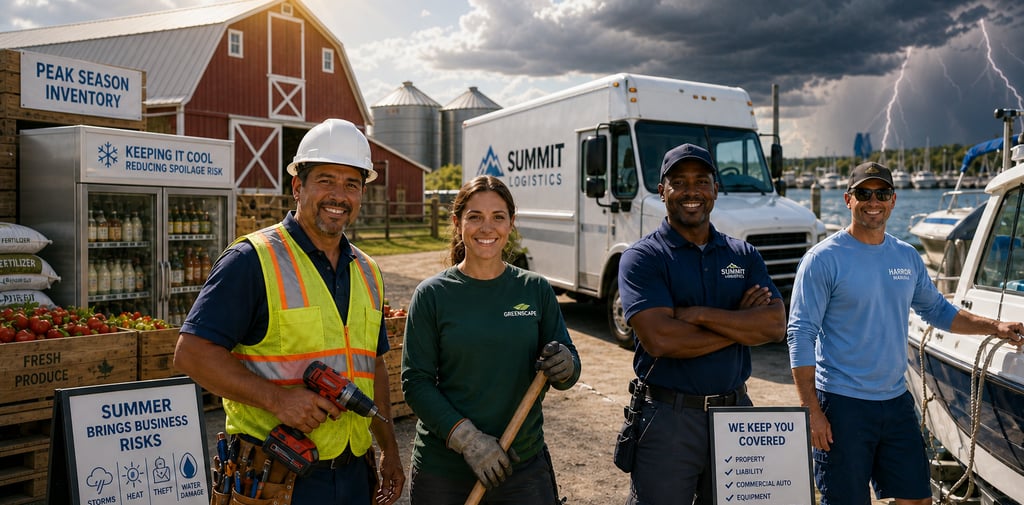
Summer brings more than just warmer weather and longer days — for businesses in Ontario, it also brings a fresh set of risks. From extreme heat to busy seasons and stormy weather, the summer months can quietly stretch your exposure if you’re not paying attention.
GENERAL ARTICLESRETAILRESTAURANTS

5 Summer Factors Businesses Should Watch
Summer brings more than just warmer weather and longer days — for businesses in Ontario, it also brings a fresh set of risks. From extreme heat to busy seasons and stormy weather, the summer months can quietly stretch your exposure if you’re not paying attention.
Here are five summer factors that business owners should watch, along with the insurance coverage that can help you stay protected.
1. Increased Heat (Including Outdoor Work and Contractor Exposure)
Extreme heat isn’t just uncomfortable; it’s a real business risk. High temperatures can stress workers, equipment, and building systems, especially in July and August.
For outdoor businesses like landscapers, farms, contractors, and mobile service teams, heat adds up quickly:
Workers face heat stress, fatigue, and increased injury risk
Equipment can overheat, fail, or perform poorly
Tools and machinery left at job sites are more exposed to theft or damage
Inside commercial properties, heat also puts pressure on HVAC systems, cooling equipment, electrical panels, and machinery. When these systems fail, you can face downtime, spoiled inventory, or even property damage.
Insurance angle: Ensure your workers’ compensation, general liability, commercial auto, and equipment coverage are aligned with summer work conditions. For properties, consider equipment breakdown coverage to protect against mechanical or electrical failures tied to heat stress.
2. Summer Storms and Severe Weather
Summer in Ontario often means sudden, intense storms: thunderstorms, heavy rain, lightning, and even localized flooding. These events can hit quickly and leave a trail of damage.
Common business impacts include:
Water intrusion from rain or flooding
Roof damage from wind or heavy rain
Power outages that shut down operations
Equipment damage from power surges
Business interruption while you clean up or repair
For businesses with perishables, refrigeration, or climate-sensitive inventory, a storm-related power outage can be especially costly.
Insurance angle: Property coverage, business interruption insurance, and, where needed, flood or water damage endorsements can make a big difference when storms hit. Make sure your policy clearly addresses water-related damage and power failure scenarios.
3. Liability Exposure from Watercraft Rentals
Summer is peak season for watercraft activity: jet skis, boats, kayaks, paddleboards, and other rentals see a major surge in use. For businesses that rent or manage watercraft, this also means higher liability exposure.
Key risks include:
Injuries to inexperienced renters
Accidents near docks, marinas, or rental areas
Congestion and backing incidents in high-traffic waters
Liability waivers that don’t fully protect the business.
Even if a customer signs a waiver, a business can still be held liable if there’s negligence in training, equipment maintenance, or safety instructions.
Insurance angle: General liability and specialized watercraft rental liability coverage are essential for operators. If you run a marina, rental operation, or recreation business, confirm that your policy explicitly covers watercraft rental activities.
4. Make Sure Key Coverages Are On the Policy: Peak Season Stock, Spoilage, and Equipment Breakdown
Summer is often a peak season for inventory, sales, and production. That’s when coverage gaps can become the most expensive.
Peak Season Stock
Many businesses see inventory levels rise in summer: retail products, food and beverage stock, recreation equipment, and seasonal supplies. If your policy limit doesn’t reflect your peak-season inventory, you could be underinsured at the time of loss. A peak season stock endorsement can adjust your limits during high-inventory months so you’re not caught short.
Spoilage
For businesses with perishable food, beverages, some chemicals, pharmaceuticals, or other temperature-sensitive products, summer heat increases spoilage risk. If power goes out, cooling systems fail, or HVAC breaks down during a heat wave, inventory can spoil quickly.
Standard property policies often don’t cover spoilage unless you have a specific endorsement.
Equipment Breakdown
Heat, humidity, and storms put extra stress on:
HVAC and cooling systems
Compressors and refrigeration units
Electrical equipment and machinery
When these fail, you can face downtime, lost sales, and inventory loss. Standard property policies typically exclude mechanical or electrical breakdown unless you have an equipment breakdown endorsement.
Insurance angle: These endorsements are often overlooked but can be critical during summer when inventory, spoilage risk, and equipment stress all rise. Ask your broker whether your policy includes:
Peak season stock coverage
Spoilage coverage
Equipment breakdown coverage
5. Higher Seasonal Traffic and Customer Volume
Summer is peak season for many businesses: tourism, retail, recreation, marinas, and service industries all see more customers. More foot traffic and vehicle movement mean more exposure.
With higher volume, you’re more likely to see:
Slip-and-fall incidents in stores, onto docks, or at service areas
Parking lot congestion and backing incidents
Increased movement of customer vehicles (especially for garages and repair shops)
Third-party property damage near your premisespacificoceanmarine
For repair shops, garages, and service centres, more customer vehicles in the shop also heighten OAP 4 exposures related to non-owned vehicles in your care, custody, or control.
Insurance angle: General liability, commercial auto (for test drives, service vehicles, and fleet), and garage keepers/OAP 4 coverage all become more important when customer volume is high. Review your limits and ensure they reflect your busiest months, not just your average.
Summer Risk Is Real — But Coverage Can Keep You Steady
Summer risks don’t wait until fall to show up. Heat, storms, watercraft liabilities, peak-season inventory, and higher customer volumes all happen now, while business is busy.
The smartest move is to treat summer as a risk-management season, not just a revenue season. Small adjustments to your coverage, like adding peak season stock, spoilage, or equipment breakdown endorsements, can make a big difference when something goes wrong.
Want a clever, no-pressure check of your coverage before fall? Give us a chance to review and quote your business insurance. You might end up with better coverage, better pricing, and a lot more peace of mind when the summer rush hits.
Disclaimer: This article is for general information purposes only and does not constitute legal, financial, or insurance advice. Insurance rules and coverage details can change, and individual circumstances vary significantly. For specific guidance about your policy, coverage options, or how these changes affect your situation, please contact a licensed insurance broker, agent, or insurer directly. You may also want to review your official Policy or consult with a legal professional for personalized advice.